
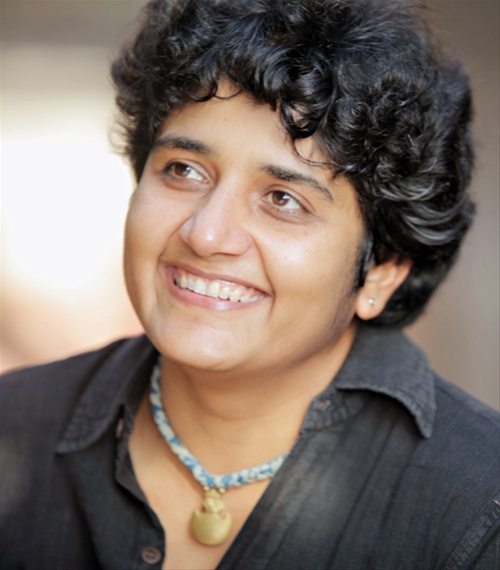
 Sameera Iyengar, an MIT graduate in Maths, is a firm believer in the power and magic of theatre. With fellow-dreamer Sanjna Kapoor, she’s now helping create platforms for theatre across India with Junoon. She tells Renu Dhole how she’s trying to make her dream a reality
Taking theatre closer to the lives of people is not going to be easy, given how little our dominant culture allows engagement with the arts. How do you plan to make this dream an everyday reality?
Dominant culture does not allow for engagement with the arts, because as a country we haven’t set up the infrastructure and the opportunities for people to regularly and easily access the arts. So that’s what we are doing as Junoon — conceiving various ways in which people can access arts and artists regularly. And we are focusing on young people, because they are both the future of this country and the future for arts in this country. And we are reaching out to corporates, because they have the financial power and social position to make a huge difference; they need to experience the richness of the arts and see how it can make a difference to their lives.
We plan to make this dream a reality by keeping at it, along with our wonderful network of artists. If we fail one way, we will try another way. Throughout the journey, we invite all like-minded people who see the value of arts for society, to join us. And we invite especially all those who have experienced the transformational power of the arts in school or college, who know how it has made a difference in their lives no matter what they are doing today. Their support and involvement will be critical to our dream coming true.
What are the breakthroughs that have delighted, and challenges that have tested you in the 1.5 years of Junoon’s journey?
Mostly the challenges have been the one we knew right at the beginning — that people do not automatically get the intrinsic value of the arts, so are not sure why they should allocate time and resources to it. Perhaps the breakthroughs that have delighted most are the internal breakthroughs we have been making as a community of artists — learning to articulate the instinctive worth of our work, learning to build experiences that connect deeply to people. We forget how wonderful we are as human beings, and we forget to nurture and validate ourselves and each other. We celebrate and nurture people through theatre, individually and collectively. It’s precious.
A lot of people think of theatre, the arts as an indulgence, given the realities we live in. What do you have to say to them?
Theatre and the arts, as they become regularly accessible, will transform our lives. They will add vibrancy to our cities, they will bring communities of people together in powerful shared experiences, they will create breathing spaces of human engagement which will refresh and energise us. They will validate us as human beings, they will celebrate our human possibilities, they will create an atmosphere of joy and togetherness. They will make us realise that we can share joyfully with strangers, that we are connected to people we do not know. They will nurture empathy. This is an indulgence we cannot do without, if we are to have a healthy world of people living together.
Coming from the world of numbers, how do you look at the sustainability of theatre? Isn’t economic viability a challenge?
Historically, the performing arts have always had patronage, because society fundamentally understood their value. The storyteller was a hugely valued person in the village, and the 18-day Mahabharata and the various forms of rural performance were all greatly looked forward to aspects of social life and community experience. And in many places still are. Royalty supported theatre in their own right too. Today, the problem we face in urban India is that we have become a world that over-values the utilitarian and under-values the human. In such a scenario, any medium that is fundamentally about the experience of being human will lose value … and that is what we have been seeing.
However, I do think we are at an interesting point today, where more and more people are feeling the lack of opportunities for rich human engagement and togetherness. Hence the growth of the term ‘soft skills’ in the corporate environment — a realisation that ‘hard skills’ or core work skills are not enough without a mature and empathetic human community. As this realisation and understanding grows, the performing arts will find patronage again, if not from governments and institutions, then at least from large numbers of individuals.