
Sandhya Deosthale is working for the welfare of tribals near Neral. She tells Vrunda Juwale about her journey so far
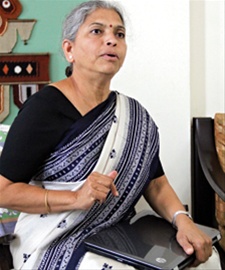
In 1947, Gandhian freedom fighter Haribhau Bhadsavle set out on a mission – the welfare of the tribals staying in Karjat taluka. Today, his daughter Sandhya Deosthale is carrying it forward, with help from committed individuals like her.
Haribhau had 45 acres of land near Neral in Maharashtra. He donated it to the Kotwalwadi Trust instituted in the memory of Bhai Kotwal and Hiraji Goma Patil who had laid down their lives in the freedom struggle. “My dad was a hands-on worker. He, along with the other trustees of the Kotwalwadi Trust, started a hostel for tribal kids. Our family stayed at Neral so that we could work closely with the adivasis staying in the various padas in Karjat taluka. Since I grew up there, I have seen the tribal life closely. It’s a tough life,” says Deosthale who after finishing her MSc, went to Mumbai to work with the Halfkine Institute.
“I was young when I had witnessed a girl dying of excessive bleeding during pregnancy. I thought if at least a few people in her surroundings knew how to help her, she would have survived. I decided to do something in preventive healthcare. But I couldn’t get admission for medical, so I did my masters in Science,” she informs.
Post marriage, she spent a few years in Africa but on her return to India, she hit the field again. For the last 12 years, Deosthale has completely devoted herself to this work. She divides her time between Pune and Neral and has a lot to talk about the work happening there. “A Mahila Vikas Kendra (women welfare centre) is in place, thanks to the help of Larsen and Toubro Public Charitable Trust. Through this centre, we try to educate tribal girls so that they become self-reliant. A girl trained here today runs a petrol pump,” she says with pride.
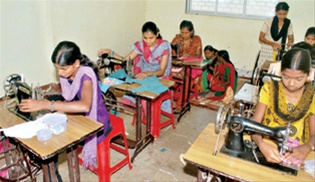
Eight years ago, they got sewing machines donated by people and started stitching classes. “We charge a nominal Rs 25 fees and give the girls all the material they require like threads, needles, cloth etc,” Deosthale shares.
Last year, the trust started the Rugna Sahayak Varg (Patient Assistance Class). “It has got tremendous response because tribals here hardly have health facilities. Also, the lack of education and widespread superstitions make the reach of treatment even more difficult. Now, the girls who study at these classes go back to their padas and attend to the sick. Some of them become teachers and impart training to the next batch. The education gives them an identity of their own and also makes them self-reliant,” she says.
The goodwill created by her dad and an army of workers, including Anuradha Bhadsavle and a tribal girl Parpet, has kept her going, Deosthale says. They get 100 per cent grant from the Social Welfare Department of the Maharashtra Government.
But they have had their share of challenges. The hostel for tribals had to be closed down in 1993 due to economic crunch. Haribhau restarted it again. “Also such vast land is sure to tempt greedy people. Post my father’s demise, I have faced pressure from politicians, mostly men but I am absolutely clear that this 45 acres of land will be used for the welfare of adivasis only,” she says firmly.
Besides skill and healthcare training for tribals, Deosthale says, they stress on farming for all. “We cultivate grains, vegetables and consume it as well. I feel the food you cultivate yourself is always tastier,” she says and smiles.
The tribal youth, with exposure through education and media like radio and TV, is longing to expand its horizons today. “They approach us to start computer classes. We want to train them in computer and mobile repairing, beautician courses etc but for that we need funds and we need manpower. We want youngsters to join us so that we can achieve these targets,” says Deosthale.