
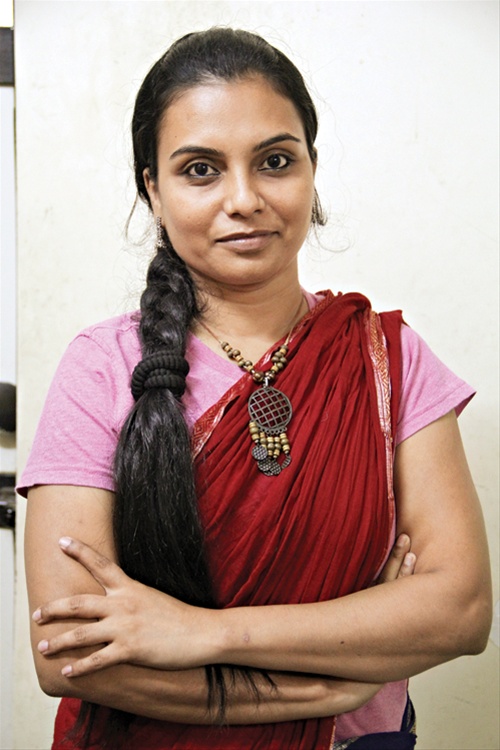
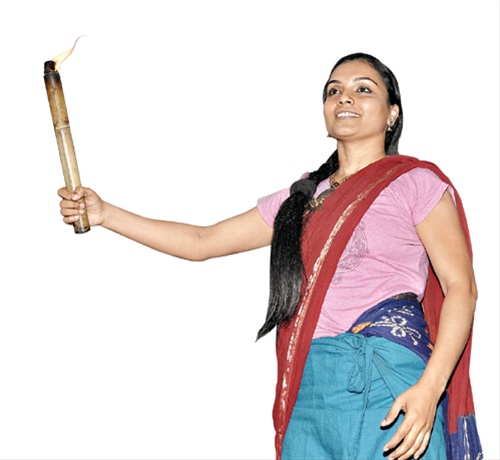
 Renu Dhole chats up Rekha Thakur who will perform Le Mashale, a play based on Irom Sharmila’s struggle against the Armed Forces Special Powers Act
What kind of conviction does it take for a theatre actor to play Irom Sharmila?
It takes an immense amount of conviction. It is tempting as an actor to seek fame, do daily serials, get paid well. I just think it is my social responsibility to spread the word about Irom Sharmila. I’ll be happy even if four people get to know what she is standing up against. It hurts me, appals me when people show total ignorance about the North East, AFSPA, Irom. They don’t know anything. Some of my friends have even asked me — is Manipur a part of India? It shakes me up. This woman has been agitating against military rule for 13 years now. Who is she?
What does her struggle mean? What kind of spirit and strength does it take to continue the non-violent fight for so long?
There are many people in my country who are facing human rights violations on a daily basis, who have grown up between legal and illegal guns, who don’t enjoy the freedom I do, who can be picked up, arrested or even shot while walking down the street on the basis of suspicion, without raising any questions… Shouldn’t this knowledge disturb me? Irom is not just an idol for me, she is a real life inspiration. Knowing her, playing her has changed my perspective towards life. I feel proud as an actor to be able to reach out to people with her message. I can’t explain the sense of achievement and satisfaction I feel when I see shock, disbelief, indignation and the urge to do something in the eyes of the audience, after they have seen my play.
 How did you get associated with Le Mashale? Were you always into political theatre?
I saw the play, written by Civic Chandran and adapted and performed by Ojas S V four years back. I was doing commercial theatre then in Pune — the Marathi play Swabhavala Aushadh Nahi to be specifc — and earlier, I was into amateur theatre in Mumbai. When I saw Le Mashale, I knew I wanted to do something like this. I spoke to Ojas, who is a family friend, and she agreed to sharing the play with me. We both now perform in different parts of the country. I know I can’t bring about a social change with my play — standing up against the law is a big thing — but making people sensitive about Irom’s cause is also important.
Does the feedback from the audience give you hope?
Yes. I have performed in various parts of the country, very far away from Manipur. I have seen people getting stunned with what’s portrayed. There is an episode in the play that especially jolts people — the incident in Manipur where many naked women marched to the Army headquarters, screaming the angry slogan ‘Indian Army rape us’, after the dead body of 32-year-old Thangjam Manorama was found badly tortured. At Belgaum, one girl came up to me and kept asking ‘How can this happen?’. Imagine what it must have taken for those women to reach this point! Students, especially, are very affected by the play — they often go to social networking sites and talk about the play and Irom’s struggle. It’s a small step towards a huge goal.
Is the space for political theatre in India shrinking?
There are definitely less actors coming into this space. I can’t blame them, it’s a personal choice. You don’t come here for money, obviously. We just ask people we perform for to cover the basic expenses like travel. I can never earn money in Irom’s name. But I feel every actor should take out some time and take up such issues. There are so many issues in this country that could do with public awareness. And the impact of theatre is huge. Nothing can give you the satisfaction that doing something like this, for a greater cause, does.